
Research & discovery
Interviews, journey maps and audits that ground the design in reality.
UI/UX & Product Design
Research, prototypes and a real design system your developers can build from, validated with users before a line of production code is written.
Why it matters
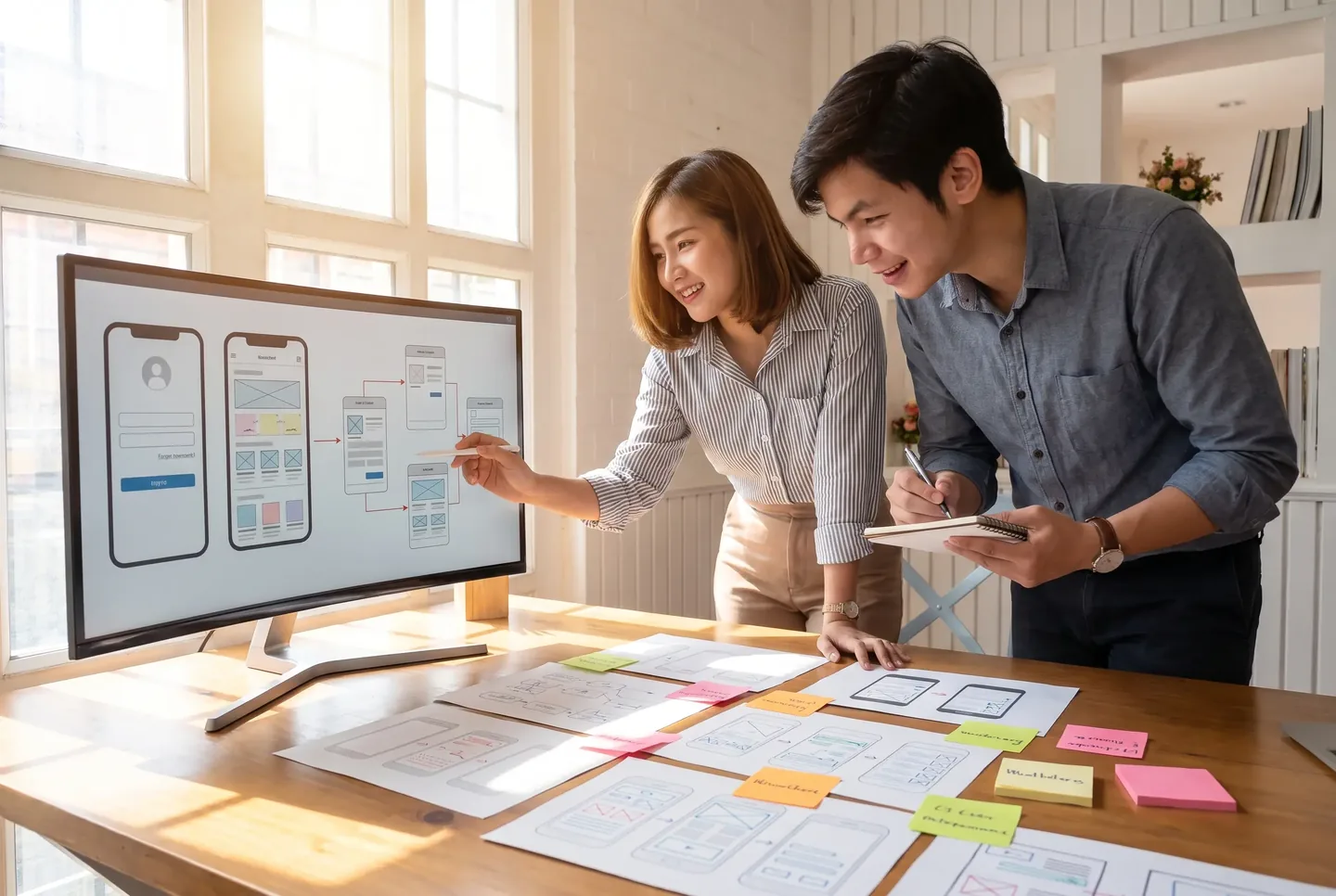
We design in the open with your team: interviews, flows and wireframes, then high-fidelity screens and a component library your engineers build straight from. Every screen is tested before it becomes code, so what ships holds up.

What's included
Interviews, journey maps and audits that ground the design in reality.
Low-fidelity structure agreed before we invest in visuals.
High-fidelity, accessible screens with a clear visual hierarchy.
A reusable component library that keeps every screen consistent.
Clickable prototypes for user testing and stakeholder sign-off.
WCAG-aware design so the product works for everyone who uses it.
Process
We map your goals, users and constraints, then agree a scope and a fixed estimate.
Wireframes, prototypes and a design system, validated with real users.
Two-week sprints with a working demo at the end of every one.
Automated and manual testing across devices before anything reaches users.
A rehearsed release with monitoring in place, not a fingers-crossed deploy.
Ongoing iteration, maintenance and a real person to call when you need one.
Why Infyze
The people who scope your project are the ones who build it, no junior bait-and-switch.
Work is broken into two-week increments you can see and steer, priced before we build.
You never wait months to see progress. Each week ends with something you can click.
The repository, the pipeline and the documentation are yours. No lock-in, no dependency.
We tie the work to numbers that matter to you and report against them honestly.
Support and iteration are part of the relationship, not an upsell once real users arrive.
The stack
We pick tools to fit your product and team, not by fashion, and we document why, so the choice still makes sense a year from now.
FAQ
It depends on the size of the product and how much research and prototyping it genuinely needs, but we quote a fixed price in writing after a short discovery call, so there is no open-ended hourly billing to worry about. A focused design pass on an existing product with a clear scope costs meaningfully less than a from-scratch design system built on real user research across multiple user types, and we scope which of those you actually need rather than defaulting to the larger, more profitable option. For a rough ballpark before we talk, try our free cost calculator: it accounts for scope and complexity and returns an instant estimate. As a general shape, a focused design engagement covering core screens and a basic component library typically takes four to six weeks; a full design system built on original user research usually runs eight to twelve weeks. The discovery call tells you which shape fits.
Both, and this matters more than it might seem. We hand off a design system your developers can build directly from, with real component specifications, spacing and interaction states documented, not just a set of static images that leave implementation details to guesswork. But we can also build it ourselves, which means the same team that designed the screens understands exactly why each decision was made and can carry that intent through to working code without anything getting lost in translation between a design agency and a separate development team. Either way, every screen is validated with real users before it becomes production code, so you are not paying to build something that looked good in a review meeting but confuses actual users on day one. If you already have a development team, we hand off cleanly with full documentation; if you want us to build it too, that continuity tends to save real time later.
You get research findings written up in plain language, not just raw notes, along with wireframes showing the structure before visual polish, high-fidelity screens for every core flow, and clickable prototypes you can test with real users or stakeholders before a line of code is written. Alongside the screens themselves, you get a reusable component library, buttons, forms, navigation patterns and the rest, documented with their states and spacing so your development team can build consistently rather than reinventing each pattern on every new screen. Everything is organised in a shared file you own outright, typically Figma, with a clear structure so someone joining the project six months later can find their way around without a guided tour. We also document the reasoning behind key decisions, not just the final screens, so the system stays usable as your product grows.
Yes, and we treat this as non-negotiable rather than optional polish. We prototype early, often with rough, unstyled wireframes before any visual design work begins, and test with real users or a representative sample of your actual audience before a line of production code is written. This catches confusing flows and wrong assumptions while they cost an afternoon to fix, rather than after development when the same fix means rebuilding working code. Testing continues through higher-fidelity prototypes as the design solidifies, so what ships has actually been used by real people, not just approved in an internal review by people who already understand the product. This matters because internal teams are often too close to a product to notice where new users get confused; a founder who has explained their product a hundred times cannot see it the way a first-time user does.
Yes. We can design within your existing brand guidelines and design tokens exactly as they stand, treating them as a firm constraint rather than a suggestion, which is the right approach when your brand identity is already established and working well in the market. Alternatively, if your brand feels dated or inconsistent across products, we can help evolve it as part of the engagement, refining the visual language while keeping enough continuity that existing customers still recognise you. We ask directly during discovery which situation you are in rather than assuming, since designing strictly within an existing system and evolving one require different processes and different amounts of research up front. If you already have a component library or design tokens defined in code, we work from those directly so design and build stay in sync.
Send a few details and we'll reply within one business day with honest first thoughts: a call, a rough estimate, or a pointer in a better direction.