
Cross-platform apps
One Flutter or React Native codebase that runs cleanly on both stores.
Mobile App Development
One shared codebase for iOS and Android with Flutter and React Native. Native where it counts, at roughly half the cost of building twice.
Why it matters
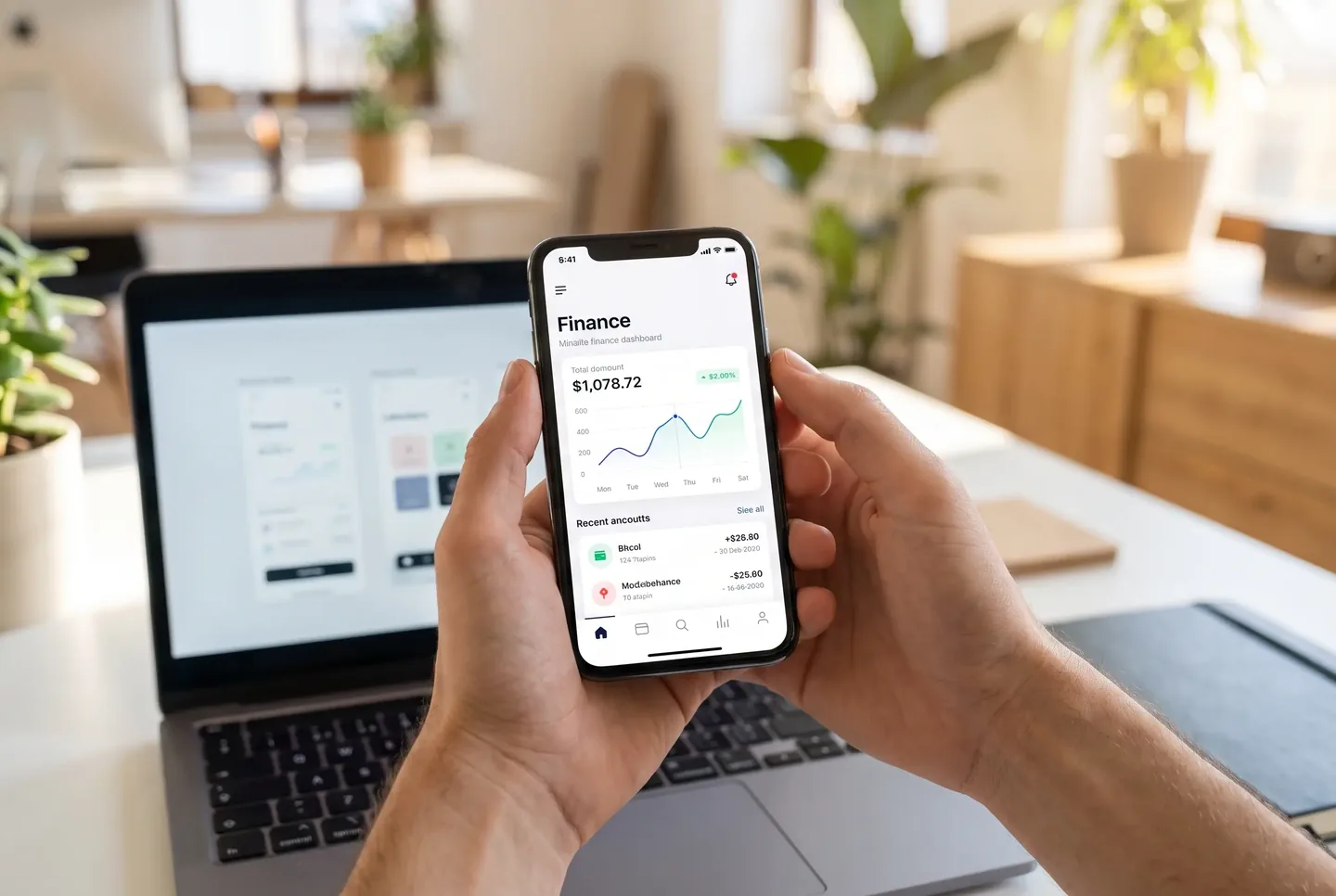
A good mobile app is more than a screen. It's offline handling, push notifications, app-store review, crash reporting and updates that don't break older phones. We ship all of it, and we ship it to both stores.


What's included
One Flutter or React Native codebase that runs cleanly on both stores.
Apps that keep working with no signal and reconcile when they reconnect.
Timely, relevant messaging that brings people back without annoying them.
We handle the review process, metadata and a staged release rollout.
Live crash reporting and usage data so you know what to fix first.
OS updates, new-device support and feature releases over time.
Swift and Kotlin apps where you need deep hardware access, heavy graphics or platform-specific behaviour.
Apps for staff, customers or field teams that plug into your internal systems, with the access controls to match.
Mobile-first interfaces designed around how your users actually tap, scroll and move through the app.
Process
We map your goals, users and constraints, then agree a scope and a fixed estimate.
Wireframes, prototypes and a design system, validated with real users.
Two-week sprints with a working demo at the end of every one.
Automated and manual testing across devices before anything reaches users.
A rehearsed release with monitoring in place, not a fingers-crossed deploy.
Ongoing iteration, maintenance and a real person to call when you need one.
Why Infyze
The people who scope your project are the ones who build it, no junior bait-and-switch.
Work is broken into two-week increments you can see and steer, priced before we build.
You never wait months to see progress. Each week ends with something you can click.
The repository, the pipeline and the documentation are yours. No lock-in, no dependency.
We tie the work to numbers that matter to you and report against them honestly.
Support and iteration are part of the relationship, not an upsell once real users arrive.
The stack
We pick tools to fit your product and team, not by fashion, and we document why, so the choice still makes sense a year from now.
Keep exploring
FAQ
It depends on the features you need and whether you are targeting one app store or both, but you get a fixed price in writing after a short discovery call, so there is no ambiguity once work starts. One cross-platform codebase built with Flutter or React Native, instead of two separate native apps, usually keeps the cost down significantly since we are not building and maintaining the same feature twice. For a rough ballpark before we talk, try our free cost calculator: choose your feature set and platforms and it returns an instant price range and timeline. As a general shape, a standard app with authentication, a handful of core screens and one or two integrations typically lands in the low five figures and takes eight to twelve weeks for both stores; anything with heavy backend logic, offline sync or hardware integration takes longer. The discovery call turns that range into a firm number.
For most products, one Flutter or React Native codebase gives you a genuinely native-feeling app on both iOS and Android at roughly half the cost of building and maintaining two separate native apps. The shared codebase means a bug fix or new feature ships to both platforms at once instead of twice, which also halves your ongoing maintenance burden after launch. We go fully native only where a specific feature genuinely demands it, certain advanced camera or AR work, deep platform integrations, or extreme performance requirements are the usual reasons, and even then it is often just one screen built natively inside an otherwise shared app rather than the whole thing. We will tell you honestly which approach your product actually needs during discovery rather than defaulting to whichever is more profitable for us; for the large majority of business apps, cross-platform is the right call and we say so plainly.
Yes, start to finish. We manage the entire submission process: developer account setup if you do not already have one, store listings with screenshots and descriptions, app signing and certificates, and a staged rollout so a new release reaches a small percentage of users first before going wide. Apple's review process in particular has a lot of small rules that trip up first-time submissions, things like privacy label accuracy and permission justifications, and we handle that navigation so you are not stuck resubmitting for weeks. Once you are live, we also set up crash reporting and basic analytics so problems in the wild surface quickly rather than showing up as one-star reviews first. If Apple or Google reject a submission for any reason, we handle the resubmission and required changes as part of the engagement, since getting you live is the actual goal, not just writing the code.
Many apps go from a standing start to live on both app stores in around eight to twelve weeks, depending on scope and how many integrations are involved. You get a build you can install and test on your own phone at the end of every two-week sprint, so progress is something you experience directly rather than something we describe in a status update. Simpler apps with a handful of screens and no complex backend can be faster, sometimes six to eight weeks; apps with heavy offline support, payments, or real-time features like chat or live tracking typically run longer, into the fourteen-to-eighteen-week range. Store review adds a bit of time at the very end, usually a few days to two weeks depending on the platform and how clean the first submission is. We give you a specific estimate for your scope after discovery, not a generic range.
Yes, without exception. The codebase, the app store developer accounts, the backend infrastructure and all documentation are yours, set up in accounts you control from the start rather than ours with you as a guest. There is no lock-in: if you want to switch developers, bring maintenance in-house, or simply want your own technical advisor to review what we built, nothing stops you, and there is no special access only we retain. We set it up this way because it is the only honest way to run a client relationship; if you stay with us for the next version or for ongoing support, which most clients do, it should be because the work and the relationship are good, not because leaving would mean rebuilding from scratch or losing access to your own store listing. You get the finished product and everything underneath it, fully in your name.
Yes, in Swift for iOS and Kotlin for Android. We usually recommend cross-platform first because it is faster and cheaper to build and maintain, but native is the better choice when the app needs deep hardware access, demanding graphics or behaviour that closely follows one platform's conventions. We tell you which case you are in during discovery, with the cost difference stated plainly, rather than defaulting to whichever option is easier for us.
Yes. Most business apps need to read from and write to something that already exists, such as a CRM, an ERP, a payment gateway or a custom backend. We build the connection securely, with proper authentication and error handling, and if the system has no usable API we build a thin layer in front of it. The same team handles the app and the integration, so nothing gets lost between two vendors. You can read more about that side of the work on our API and system integration page.
We treat security as part of the build, not a final check. Data is encrypted in transit and, where it is sensitive, on the device; the app talks to the backend through authenticated APIs; and we follow each platform's own security guidance for things like secure storage and permissions. Before launch we test for common mobile vulnerabilities. No honest team promises an app is unbreakable, so we document what is protected and where the remaining risks sit.
Apps need ongoing care, because Apple and Google release new OS versions every year and each one can break something. After launch we monitor crashes and performance, fix bugs, and update the app for new OS versions and devices. If you want it, we continue with new features in the same two-week sprint rhythm. This is covered in more detail under our maintenance service.
Yes, and we recommend it, because design and engineering decisions are easier when the same team makes them. We design mobile-first interfaces from wireframes through to a clickable prototype you can test on your own phone before development starts, so changes happen while they are still cheap. If you already have designs from your own team or another studio, we build from those instead. Our product design service covers the full process.
Send a few details and we'll reply within one business day with honest first thoughts: a call, a rough estimate, or a pointer in a better direction.